Playrise: Even in a war zone, children need the chance to play. We're making it possible
Play is just as necessary – if not more so – for children affected by humanitarian crises
by: Ariana Mouyiaris
3 Apr 2026
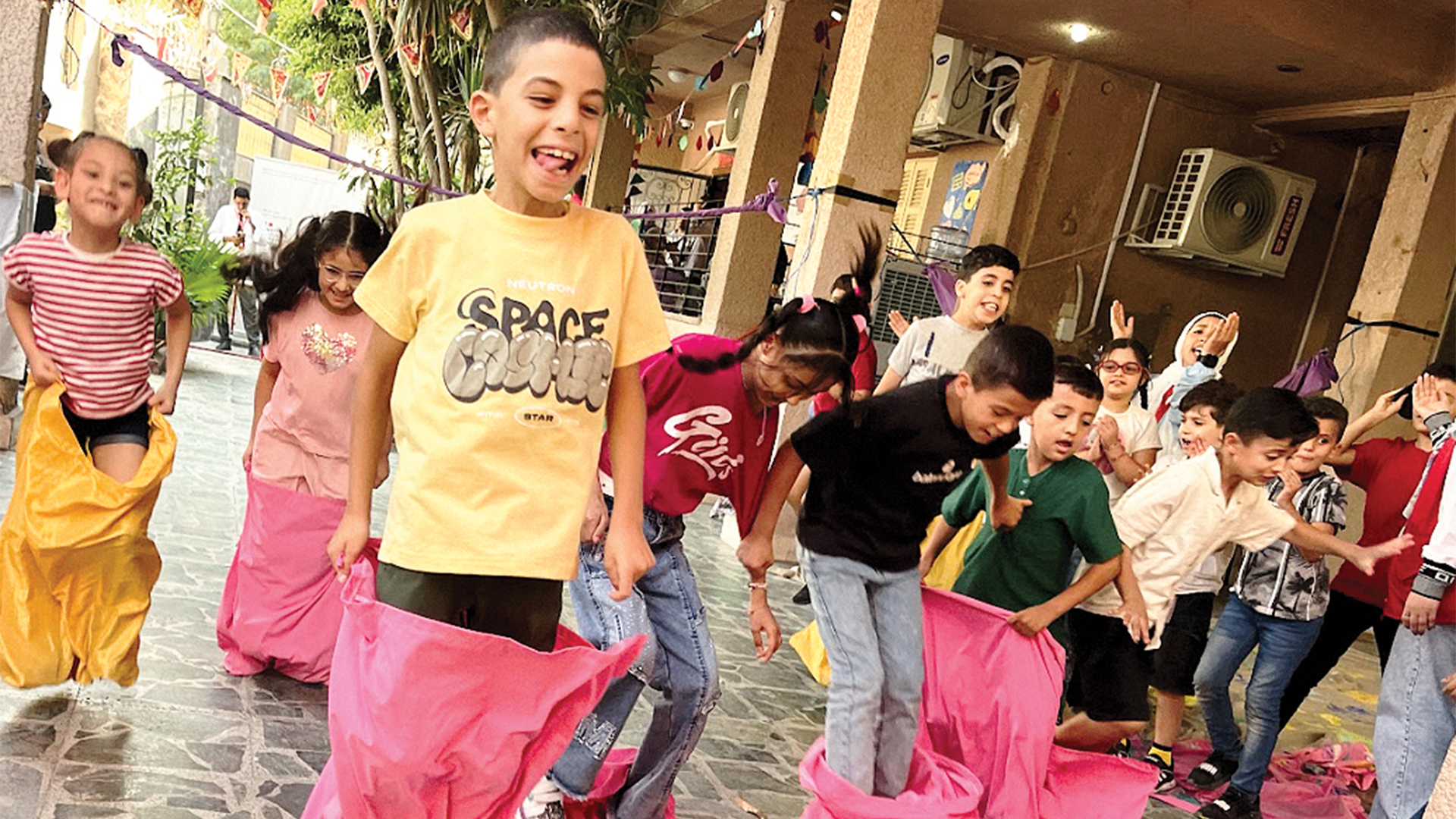
Playrise gives children caught up in conflict a chance to play. Image: Playrise
Share
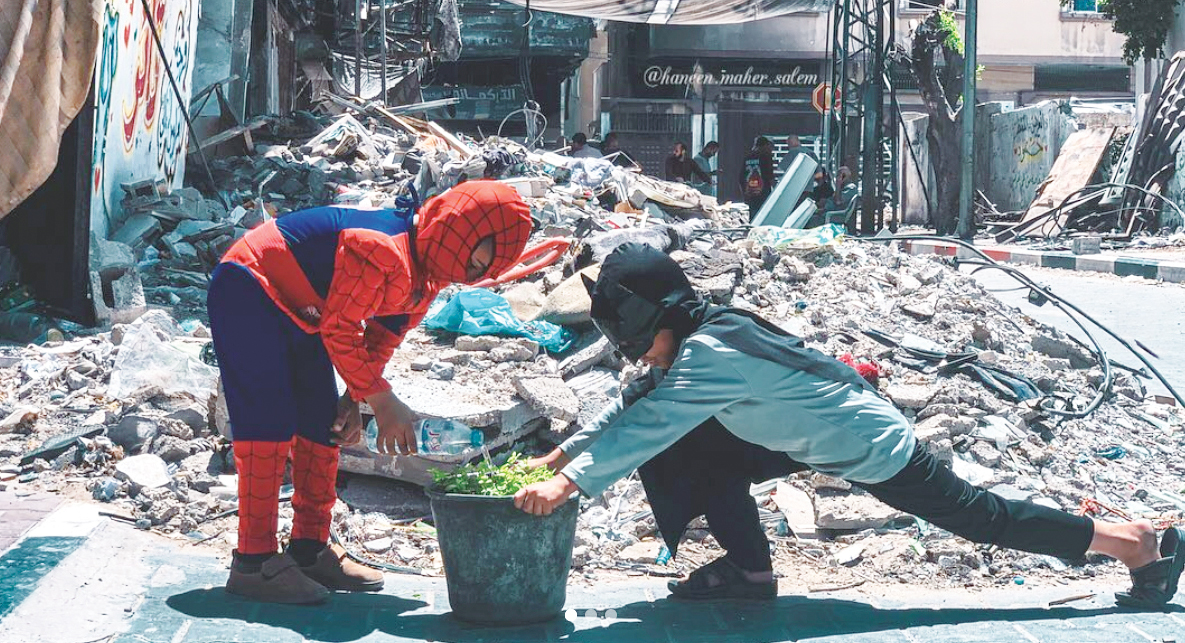
In November 2024, an Instagram post stopped me mid-scroll. It was an image of two Palestinian boys, in Spider-Man and Batman costumes, playing amid the rubble of northern Gaza.
The photographer who captured the scene, Haneen Maher Salem, wrote: “They laughed and imitated their heroes with innocent movements, as if the war surrounding them were nothing but a distant illusion. Despite everything, there was a light of hope in their eyes, as if life was still worth living.”
Not long after this, another photographer – my husband Alex – shared with me the seeds of an idea he’d been nursing for some time: a way to bring play to disaster relief zones around the world. It resonated immediately.
The superhero kids who sparked an idea. Image: @Haneen.maher.salem
I thought of the superheroes in the ruins, and then of my own sons. We often watched our boys, aged four and two, inside the wooden playhouse that Alex had built for them, arguing who had the strongest claim to this new domain and negotiating their way to a resolution.
Children use play to shape their relationships, and the lessons they learn influence how they experience the world and what they bring to it. Play is how society learns to build itself, and it is also how we keep hope alive.
Dr Stuart Brown, founder of the National Institute for Play (NIFP), talks of how play deprivation diminishes the development of empathy and social competency. After 30 years studying play, NIFP argues that play is as critical as sleep, dreams and nutrition to our health and wellbeing.
Advertising helps fund Big Issue’s mission to end poverty
Advertising helps fund Big Issue’s mission to end poverty
Play is just as necessary – if not more so – for children affected by humanitarian crises. More than toys, children need safe environments to enter into their imaginations, to run free, to give themselves over to movement around other children. Crisis disrupts children’s normal developmental pathways, and the longer they are deprived of access to play, the more development is hampered. Early intervention can allow children to re-engage developmental processes before stagnation sets in.
In 1989, the UN Convention on the Rights of the Child recognised children’s right to play, but as with many noble humanitarian ideals, the practical provision to meet and support this claim is nominal at best and, often, not fit for purpose. Play provision is top-down and, frequently, unsuited to the territories to which it is deployed.
According to UNHCR, over 120 million people were forcibly displaced worldwide as of 2024, approximately 40% of whom were children.
The sheer scale of this displacement creates complex humanitarian challenges, particularly for the youngest and most vulnerable. Play is one of the last things provided as part of humanitarian response packages, with less than 3% of funding being directed towards education, according to the World Bank, and only a fraction of that likely to support play.
Advertising helps fund Big Issue’s mission to end poverty
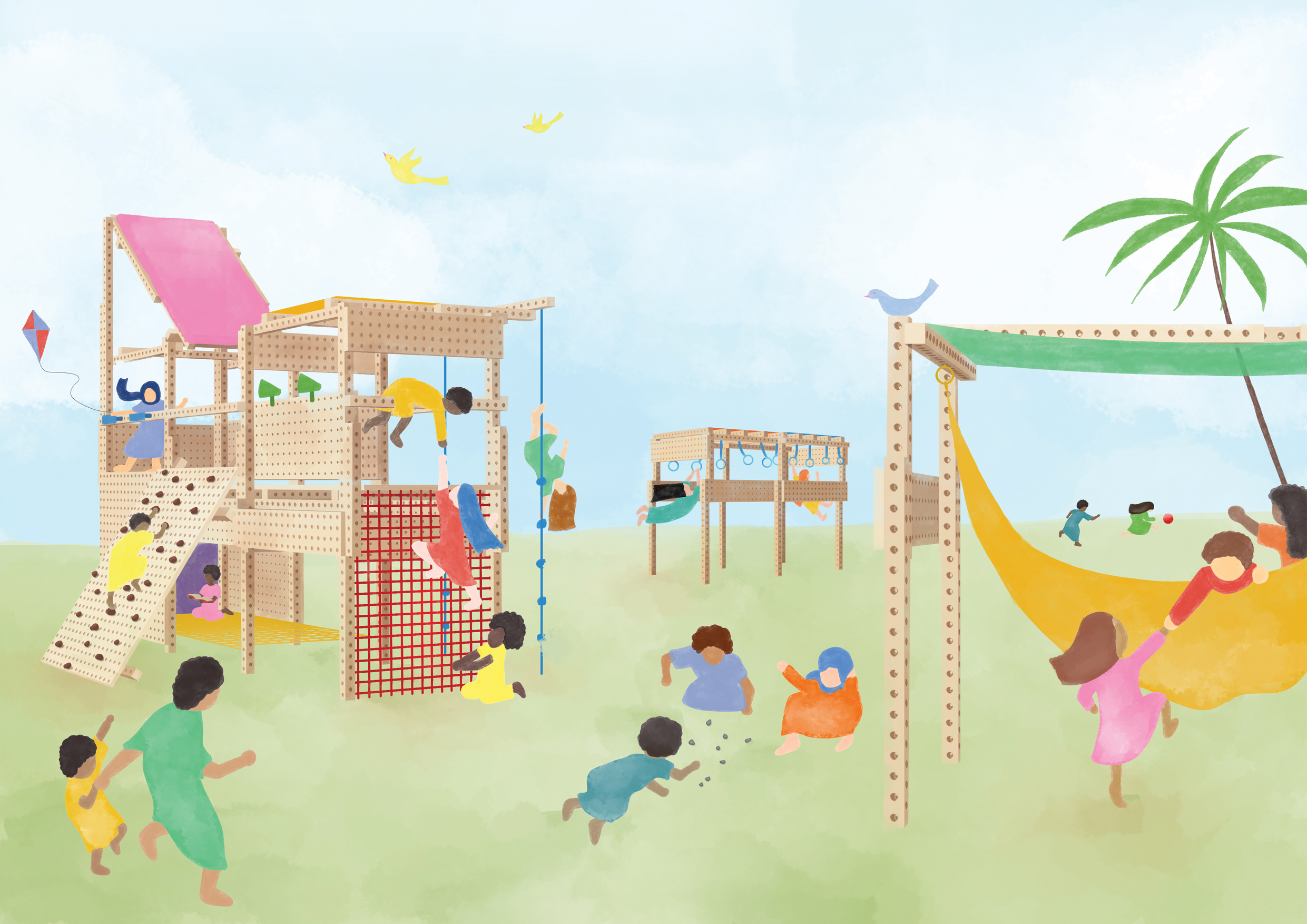
The case for a project like Playrise was compelling. Early in 2025, we brought together architects and engineering specialists to research and develop a system of play structures that would be modular, affordable, simple to transport and easy to install anywhere in the world.
Artist’s drawing of modular play structures
We had first-hand experience and discussion with affected communities to inform the design. In summer 2025, in partnership with the NGOs Empowerment for Development and Save the Children, the Playrise team travelled to humanitarian relief sites and refugee communities in Ethiopia, Cairo and Karkar, southern Egypt.
With average displacement lasting 10 to 17 years for refugees and 23 years for internally displaced people, many children may spend their entire childhood in refugee camps. What arises is a Catch-22 for many communities – the hosts do not want to imagine these sites as long-term solutions. This means that infrastructure built as temporary often becomes permanent.
In Aysaita, a camp for Eritrean refugees in Ethiopia, we saw rusting swings and broken metal slides. Midday heat can often surpass 40C, and the allocation of resources seemed so far removed from the reality of the children there, who would never be able to play with the equipment that had been provided. A communal reminder that, despite best intentions, the children’s needs were not being truly seen by those with funds in the global north.
Listening to these communities, watching children at play and workshopping ideas with them, we learned that they want choice. They want ownership of space – somewhere that responds to them. As Alex says, the needs and dreams of a girl in Aysaita refugee camp are not so different from the needs and dreams of a boy in North London.
All children want to play – we just need to give them the space to do it. Any parent who has seen their child lost in play and squealing with delight knows the joy of these moments.
Advertising helps fund Big Issue’s mission to end poverty
Where we are born is arbitrary, but the right to play safely should be fundamental for all. Children must be given the space to be just that: children.
Ariana Mouyiaris is an entrepreneur, creative director, and the co-founder of Playrise. It is currently raising funds to launch its first pilot programmes in Ethiopia and Egypt. playrise.org
Buy from your local Big Issue vendor every week – and always take the magazine. It’s how vendors earn with dignity and move forward.
You can also support online: Subscribe to the magazine or support our work with a monthly gift. Your support helps vendors earn, learn and thrive while strengthening our frontline services.
Advertising helps fund Big Issue’s mission to end poverty
Thank you for standing with Big Issue vendors.
Advertising helps fund Big Issue’s mission to end poverty